Last Updated on July 14, 2026 by Sarah Jaffe
On a daily basis, many workers, such as those in trades, factories, and construction, take a staggering number of steps – anywhere from 9,000 to 12,000. When you think about it over the course of a year, that’s a whopping 2.5 million times their feet hit the ground, often on hard surfaces like concrete and iron. This kind of workload is extremely demanding, both physically and mentally. For millions of these workers, every single step they take is made while wearing steel-toe boots, which are often required as part of their job.
These heavy-duty shields are great at stopping serious accidents at work, but now people are worried about a different kind of danger they might pose. They’re really good at preventing injuries that can break bones, but it seems they might have some other risks that aren’t so obvious.
It’s shocking to think that so many people who work in industries have to deal with foot pain every day. A big part of the problem seems to be the safety shoes they have to wear. Research on these shoes shows that a lot of workers, up to 60%, have ongoing pain and discomfort. This can range from really bad heel pain to nerve problems. What’s even worse is that 43% of workers say the pain from their safety boots is so bad that it’s actually getting in the way of them doing their jobs. This is a pretty big deal, and it’s something that needs to be looked at more closely. Maybe if we can find a way to make safety shoes more comfortable, we can help reduce the amount of foot pain that workers have to deal with. It’s not just about making workers more comfortable, it’s also about helping them be more productive and do their jobs better.
So, what happens when the very gear designed to protect you becomes the source of your daily misery?
When you wear standard work boots, they might protect your toes from things that fall on them, but they can also change the way you walk and make your feet feel uncomfortable. This is because the boots are stiff and don’t bend easily, which can trap moisture and put pressure on the nerves in your feet. We want to look closer at how safety boots work and answer an important question: can steel toe boots cause foot problems forever, or is it just that you’re wearing them incorrectly? Let’s take a closer look at the potential problems with these boots and figure out how to fix them before you go to work again.
What are Steel Toe Boots? (Understanding Safety Footwear)
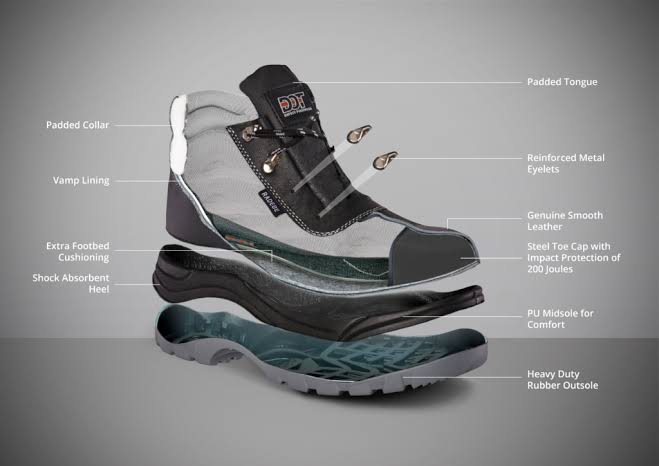
Image Source: DOT Safety Footwear
Steel toe boots are a type of safety shoe that has a strong cap in the toe part, usually made of steel. This cap is what makes them special and gives them their name. The rest of the boot looks and works like a regular shoe, but the toe area has a hard shield that can take a hit and keep your toes safe. If something heavy falls on your foot or gets stuck between things, the cap helps spread out the force and pushes it away from your toes, so you’re less likely to get hurt, break a bone, or even lose a toe.
The protective cap is positioned just above and around the toes, fitted inside the boot’s outer material, so it’s not visible from the outside, but you can often feel it as a slightly firmer, curved area at the front.
To ensure safety, manufacturers test these caps against recognized standards, like ASTM F2413 in the US or EN ISO 20345 in Europe, which specify the amount of impact and compression force the cap must withstand before it can be certified as safety footwear.
Some modern versions use composite materials, such as carbon fibre or reinforced plastic, instead of steel, offering similar protection with less weight and better temperature insulation. Even though these new materials are used, the term “steel toe” has still stuck as the common term, regardless of the material used. This is because the name has become synonymous with safety footwear, even if the actual material has changed over time.
Many jobs, like construction, manufacturing, and mining, need steel toe boots to keep workers safe. This is because things like tools, equipment, and heavy boxes can fall and hurt people’s feet. Employers want their workers to wear these boots so they can follow safety rules, like those set by OSHA, and reduce the number of injuries at work.
When workers wear steel toe boots, they are protecting themselves from getting hurt. It’s not just about following the rules, it’s about being safe on the job. Steel toe boots are important for people who work in warehouses, logistics, and other jobs where heavy things are moved around. These boots can help prevent common injuries, like broken toes, which can happen when something heavy falls on someone’s foot.
By wearing steel toe boots, workers can feel safer and more confident on the job. Employers also benefit when workers wear steel toe boots. They have fewer injuries to report, which means they can stay in compliance with safety regulations. This helps create a safer work environment, where everyone can focus on doing their job without worrying about getting hurt. Overall, steel toe boots are a simple but important way to keep workers safe and healthy on the job.
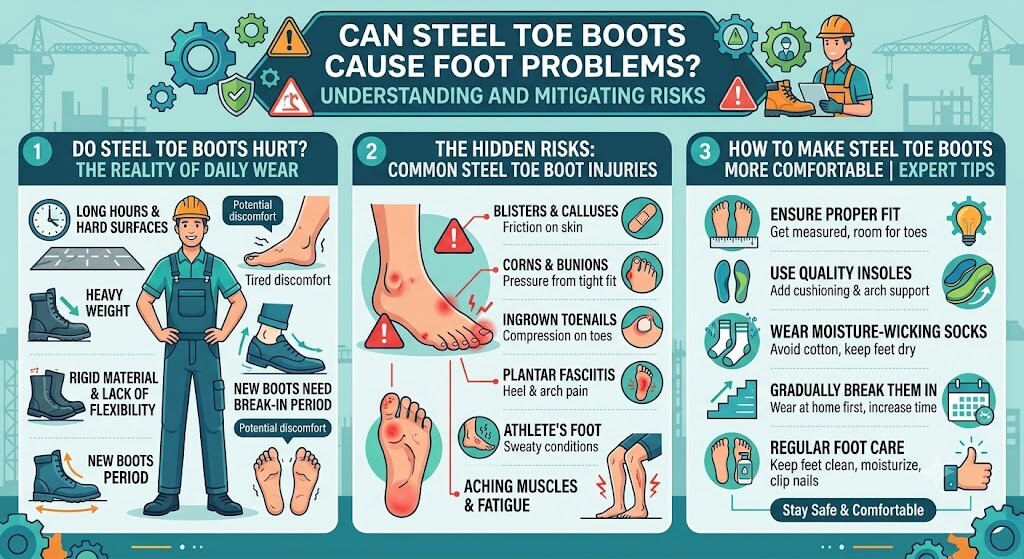
Do Steel Toe Boots Hurt? The Reality of Daily Wear
So, you’re wondering if steel toe boots are uncomfortable? Honestly, they shouldn’t be, but sometimes they can be – and it usually comes down to how well they fit and their quality.
When you get a pair that fits just right and is made well, they should feel like strong, protective shoes, not something that hurts your feet all day. But, a lot of people do get sore feet, feel pressure points, or get tired by the end of a long day, especially when they’re breaking in a new pair or wearing boots that don’t fit quite right. The hard toe part, thicker soles, and heavier build of these boots mean they can be a bit rough on your feet, and it takes some time to get used to them – it’s like your feet need to adjust to a new way of walking.
Do steel toe boots hurt your feet? Not really, it’s not the boots themselves, but how they fit that can cause problems. If they’re too tight or too loose, or don’t support your arches and heels properly, you can end up with blisters, calluses, and numbness. You might even get arch pain or lower back strain from walking funny to compensate for the bad fit. And let’s not forget about the weight of the boots – if you’re wearing heavy ones for long hours every day, your legs and feet are going to feel tired, especially if you’re standing on hard floors.
It’s not the steel toe itself, but all these other factors that can make your feet unhappy. A good fit and the right support can make all the difference, so it’s worth taking the time to get it just right.
Do steel toe boots really pose a danger? It’s time to set the record straight and separate fact from fiction. There’s a common myth that steel toe caps can actually cause more harm than good in an accident, potentially crushing or slicing through your toes. But the truth is, this just isn’t accurate. Steel and composite toe caps are carefully designed and tested to prevent this from happening. They’re built to absorb and distribute force, not to amplify it or make things worse.
It’s understandable that the idea of having a rigid metal object near your toes might seem a bit counterintuitive, but the engineering that goes into certified safety footwear takes this concern into account. The reality is, steel toe boots are designed to protect your feet, not put them in harm’s way.
The main problem with steel toe boots isn’t that the steel cap will crush your toes, but rather what happens when the rest of the boot doesn’t give your foot the support it needs. If the boot doesn’t fit right, or if it’s made of stiff materials that don’t bend with your foot, or if it doesn’t have enough arch or heel support, that’s when you can start to feel pain in your feet, have posture problems, and be uncomfortable for a long time.
So, it’s not that steel toe boots are bad by design, it’s just that they can become uncomfortable or even hurt you if the boot around the steel cap isn’t doing its job. That’s why it’s so important to choose the right size, to break them in properly, and to get a supportive insole – it can make all the difference between boots that keep your feet safe and boots that can actually cause problems.
The Hidden Risks: Common Steel Toe Boot Injuries
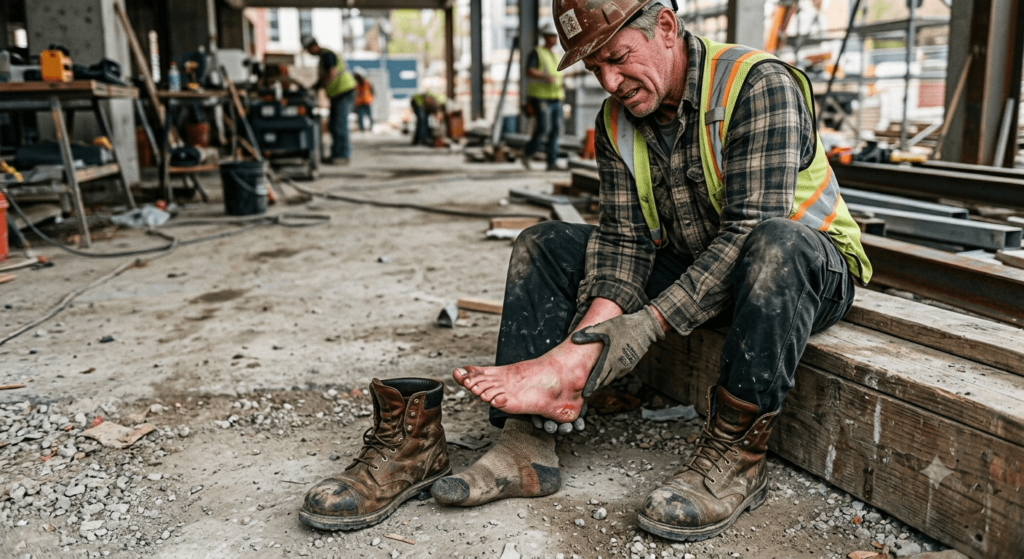
When workers complain about steel toe boots being dangerous, they’re not usually talking about the toe cap itself, but rather the discomfort they’ve experienced on the job. The truth is, most injuries related to steel toe boots aren’t the result of dramatic accidents, but rather slow-building problems that come from friction, pressure, and lack of support over long periods of time.
By understanding these specific issues, workers can identify potential problems early on and choose boots that will actually protect their feet, rather than causing them harm over time. It’s all about finding the right boots to prevent cumulative damage, and that starts with recognizing the risks associated with poor footwear.
Blisters, Corns, and Calluses
One of the biggest problems people have with steel toe boots is also one of the easiest to avoid: getting blisters, corns, and calluses from friction. These boots are made to be tough, but that means they can be stiff at first, not like regular shoes that are more flexible. When you wear them, your feet move around inside and rub against the stiff material, causing friction in certain spots like the heels, the sides of your feet, and especially your toes. This friction can lead to blisters, which can then turn into painful calluses or corns if you keep wearing the boots without giving your feet a chance to get used to them.
But there are things you can do to make it better. Wearing the right socks, like ones that wick away moisture and have extra cushioning, can really help. Also, taking the time to break in your boots slowly can make a big difference.
Steel Toe Boots Rubbing the Big Toe (Ingrown Toenails & Friction)
One of the most frequently searched complaints is steel toe boots rubbing the big toe, and it’s a legitimate pain point—particularly for workers whose boots run narrow in the toe box. Because the protective cap doesn’t flex, a boot that’s too tight or too shallow in this area forces the big toe against a hard, unyielding surface with every step.
Over time, this constant rubbing can cause painful friction blisters, thickened skin, and in more serious cases, contribute to ingrown toenails as the nail bed is pushed against the boot’s edge repeatedly. Workers experiencing this issue usually need a wider toe box or a different brand altogether, since no amount of breaking-in will fix a cap that’s fundamentally too small for their foot shape.
Nerve Compression and Neuroma
Wearing steel toe boots can cause a not-so-obvious but serious problem – nerve compression. This can lead to a condition called Morton’s neuroma. It happens when the nerves between the toes, usually between the third and fourth toes, get compressed or irritated. This is often because the boot is too narrow or the laces are too tight.
People who have this condition may feel a burning sensation, tingling, or like they’re standing on a pebble that won’t go away, even after they take off their boots. The problem is that steel toe boots don’t let toes move naturally, like they would if you were barefoot. So, the compression can build up over time, sometimes taking months or years of wearing the boots. This makes it a big issue for foot health in the workplace that doesn’t get enough attention.
Plantar Fasciitis and Heel Pain
People who wear steel toe boots for long hours, especially on hard floors like concrete, often get plantar fasciitis and heel pain. This happens when the tissue that connects the heel to the toes gets inflamed, usually because the boots don’t support the arch well, the insoles are worn out, or they don’t cushion the impact properly.
Many safety boots focus on protection and durability, but not enough on comfort and support, which means the plantar fascia has to absorb more stress than it should, shift after shift. If you don’t have good insoles or orthotic inserts, this heel pain can become a long-term problem, making something as simple as walking a daily source of discomfort. It’s a reminder that how well a boot fits and supports your foot inside is just as important as the protection it offers on the outside.
How to Make Steel Toe Boots More Comfortable: 5 Expert Tips
We all know that there are many changes you can make to make steel toe boots more comfortable, but we have identified the 5 most common reasons of pain and fatigue in the feet whilst wearing Steel Toe Boots, and have written expert advice on how to fix these problems to make your boot feel as if you have hardly been to work for the day by lunchtime. We have listed these below to help address the issues that affect most people.
Upgrade Your Gear: Choosing the Best Steel Toe Boot Socks
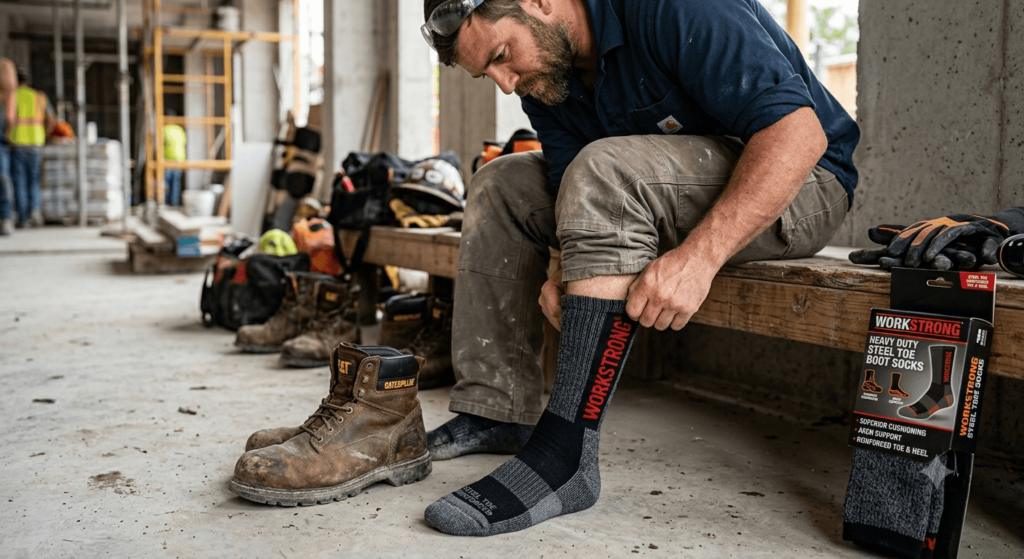
Working long hours in steel toe boots can be a real gruelling experience. One of the smallest factors that can play a huge role in your comfort is your choice of socks. Regular cotton socks are far from ideal to wear with steel toe boots as they can very quickly become soggy, bunched up and cause blisters of uncomfortable hot spots, particularly on the toe cap and heel of the foot.
To combat these issues it is highly recommended to wear socks that are specifically designed for this type of use and are typically made from moisture wicking materials such as merino wool or synthetic fibers such as nylon and spandex. In addition to choosing the right material for your socks it is also worth looking for extra cushioning in the toe and heel areas to reduce pressure on these sensitive parts of your foot. Wool blends in particular are very popular for work socks as they are excellent at wicking away moisture to keep your feet dry and also provide excellent temperature regulation to keep your feet at the optimal temperature for comfort whatever the conditions outside.
By choosing the right socks for your steel toe boots you can make them feel a great deal more comfortable and this can make a huge difference to your working day. Some of the key things to look for in a good pair of work socks are thick cushioning in the correct places, moisture wicking properties and a comfortable fit. With so many different types of socks available it is definitely worth taking the time to try out a few different types to find the ones that suit you best.
Invest in Supportive Orthotic Insoles
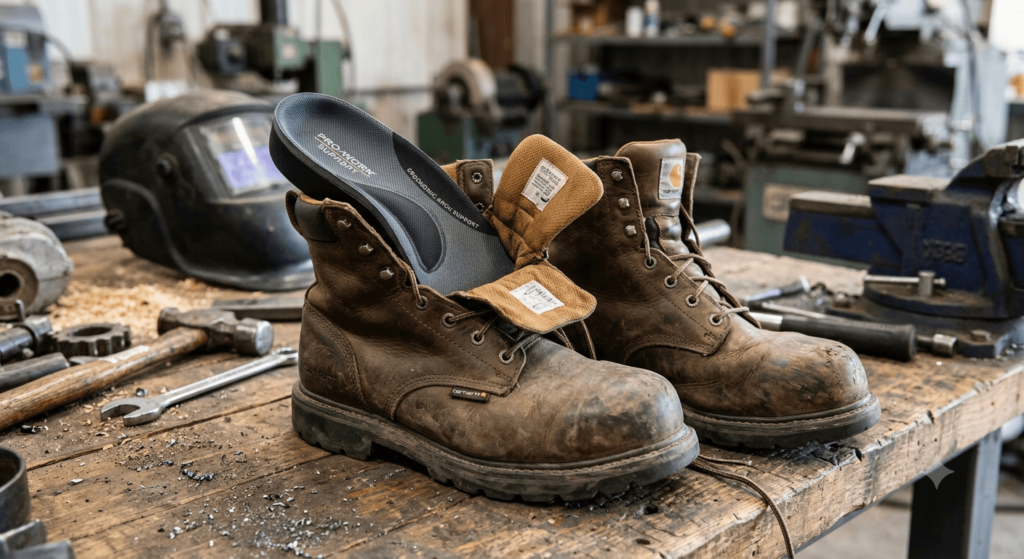
As we have previously stated the standard insole that comes with most Steel Toe Boots are made as low cost thin slabs of material and do not have any arch support, these are ok for short periods of time but after a long 8hr day on concrete or over uneven terrain they can cause lots of discomfort and pain. Replacing these standard insoles with a high quality orthotic or cushioned insole could be the biggest change you make to your boots and has the biggest impact. These type of insoles come in a variety of shapes and sizes but look for ones that have proper arch contours and a good heel cup.
Also look for shock absorption using materials such as gel or high density foams (polyurethane or EVA). These types of insoles will help to ease the pressure on the balls of your feet and your heels and also help to improve your posture and stop fatigue traveling up your legs into your knees and lower back after long periods of time.
Master the Fit (Leaving Room for the Steel Cap)
Trying to get a comfortable fit in work boots can be very different to trying on other shoes. The steel or composite parts at the front of steel toe boots do not flex so care must be taken to ensure there is sufficient room at the front of the boot to prevent pressure on the edges but not so much room that your foot slips forward and makes contact with the front of the boot with every step.
A good test for this is to stand the boot up and ensure there is a thumb’s width of space between the longest toe and the front of the boot. It’s also a good idea to try on your work boots in the late afternoon as this is when your feet will be at their largest due to fluid swelling in the day. Also, it’s a good idea to wear the same socks in the shop as you intend to wear working. In this way you will really get a feeling for how the boots will feel when you are wearing them for long periods.
The Right Way to Break Them In
Breaking in a new pair of steel toe boots takes time, and can be painful if you try to rush the process. The common misconception with breaking in a new pair of boots is that you can wear them straight away for your entire shift at work. This isn’t the case and can cause discomfort that can be avoided by easing your boots into wear over a period of time. Breaking in your boots is best done by gradually increasing the wear time over the course of 1-2 weeks. This allows the upper of the boot (whether it be made of leather or synthetic materials) to soften and form to the exact shape of your foot.
In conjunction with the upper material forming to your foot, your skin will also form to the new pressure points caused by the boot. By applying a leather conditioner to leather boots you can speed up the breaking in process. The leather conditioner makes the upper of the boot more flexible, without sacrificing any of the boot’s durability. Many people experience blisters in their boots because they haven’t taken the time to properly break in the boots. This is often mistaken for the boots themselves being uncomfortable, when in reality the boots are perfectly fine and just need to be worn for a longer period of time with gradually increasing levels of pressure.
The Last Words
Steel toe boots are often a very important piece of protective gear that workers wear to and from work. But protection from injury to the feet should not have to come at the expense of comfort during work and potentially long-term damage to the feet and toes after work. There are many hidden risks of discomfort and potentially serious injury to the feet. Blisters, pressure points, plantar fasciitis, toe compression injuries and more are just a few of the potential problems that can be avoided in many cases with the proper fitting of boots and with the use of the right socks, insoles, and break-in method. Don’t let your feet become a chronic problem. Spend a little time getting the right boots and taking care of them properly. Your feet will thank you for years to come!
